
Credit Union vs Bank: What Most People Get Wrong
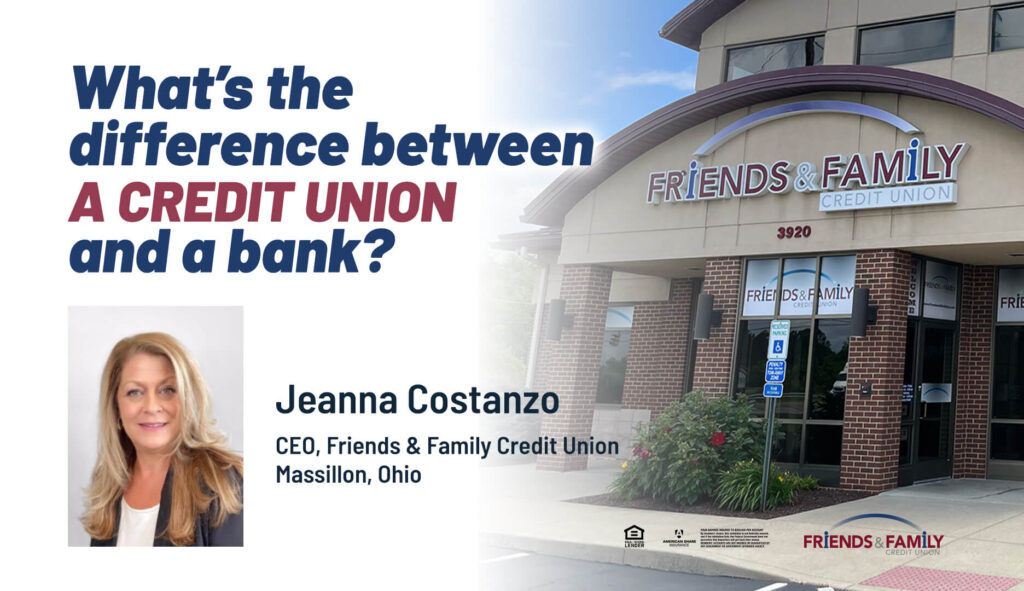
By Jeanna Costanzo, CEO of of Friends and Family Credit Union
What do most people misunderstand when comparing a credit union vs. a bank?
One key point is the ownership structure.
A credit union is a member-owned financial institution, meaning every account holder becomes a partial owner. Banks, by contrast, are for-profit businesses owned by shareholders. According to the HelloNation article, this difference directly impacts how decisions are made, how earnings are used, and how customers are treated.
Because a not-for-profit credit union does not operate to generate profits for outside investors, any extra revenue is typically returned to its members. This can result in lower banking fees, better savings rates, and more favorable loan terms. The article emphasizes that these practical benefits may significantly affect household finances over time.
While national banks often follow centralized policies, credit unions tend to make decisions locally. That regional approach enables credit unions like Friends and Family Credit Union to understand member needs better and respond with greater flexibility. This can matter especially when members face unexpected life changes or need personalized financial support.
Another misconception addressed is the idea that credit unions offer fewer services.
Many people still assume credit unions are small or limited in scope. Most credit unions today offer full-service options, including mobile banking, credit cards, mortgages, and auto loans. Through shared branch networks, members can access services nationwide, making community banking more convenient than many realize.
Another difference is community impact. Since a not-for-profit credit union reinvests its earnings locally, those funds stay within the region and support economic growth. This local reinvestment strengthens neighborhood financial health and delivers long-term benefits to residents.
The question of eligibility also comes up. Many still believe membership is difficult or exclusive, but the article notes that most people can qualify based on where they live, work, or worship. That means access to the advantages of a member-owned financial institution is more widely available than many assume.
Choosing a financial institution is not just about size or brand. It’s about values, priorities, and real-life impact. Understanding the structure and mission of a not-for-profit credit union can help people make smarter, more informed choices.
Want more information?
Credit Union vs. Bank: What Most People Get Wrong features insights from Jeanna Costanzo, Credit Union Expert of Massillon, OH, in HelloNation.